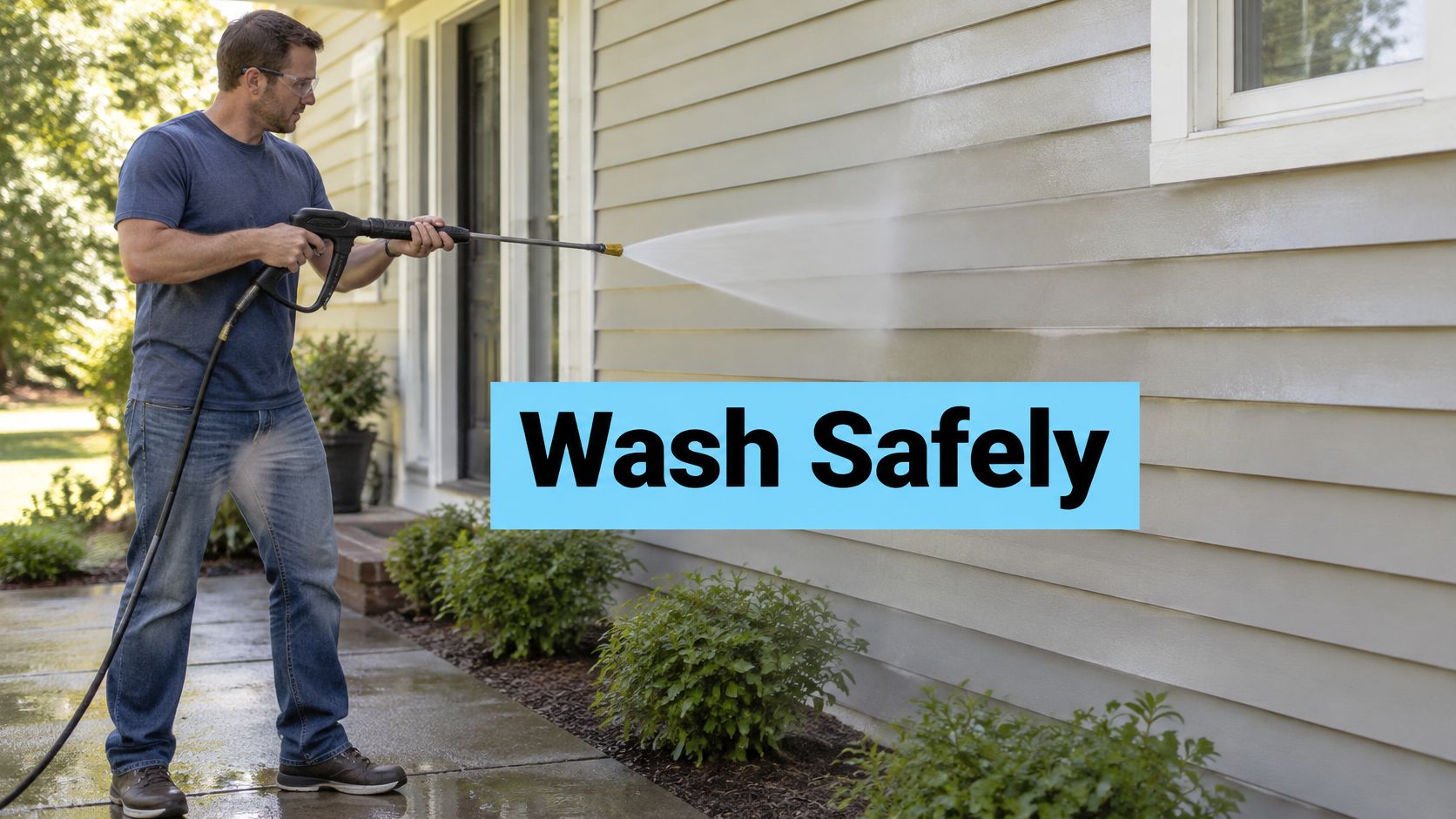
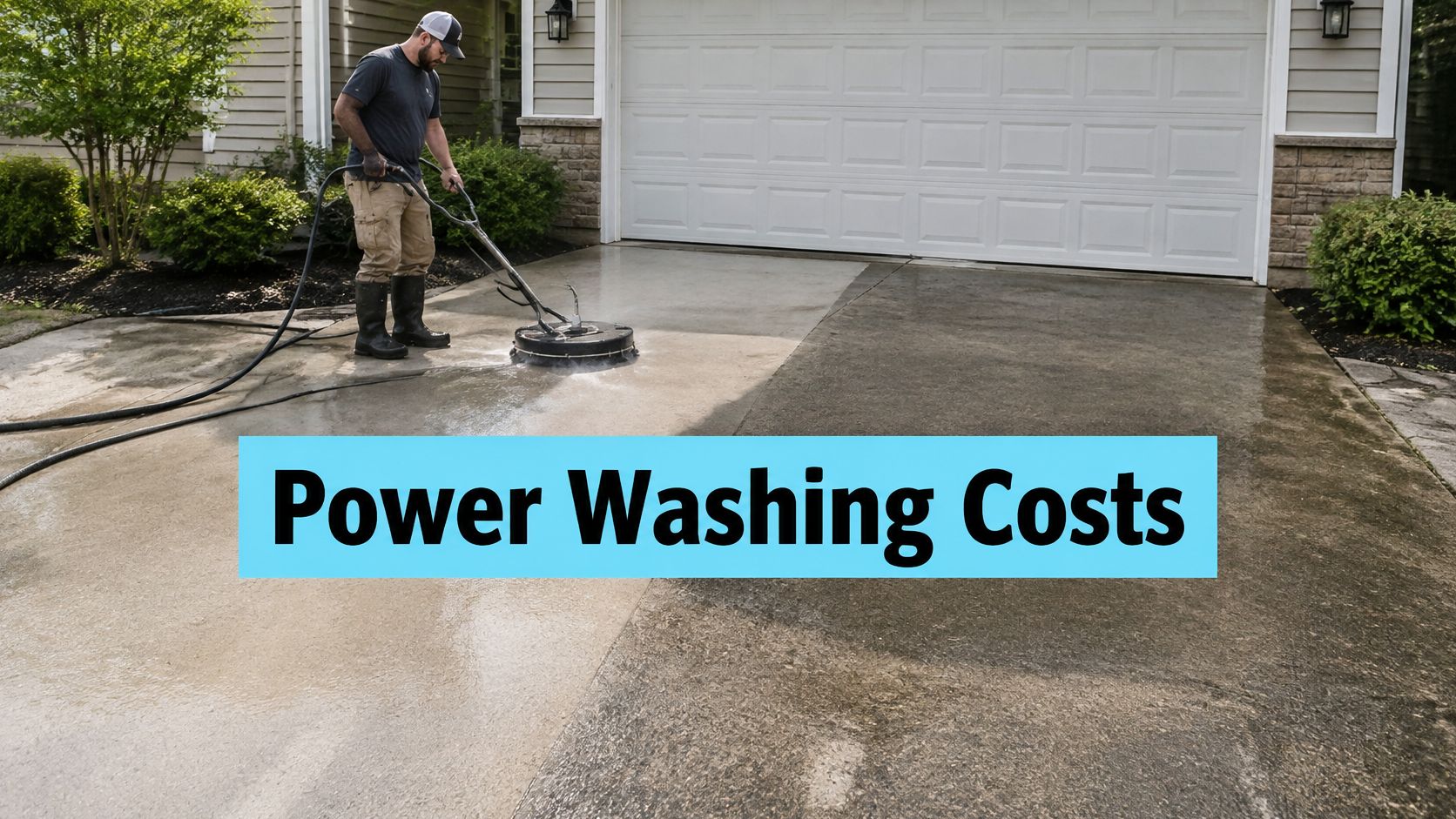
Three estimates for the same driveway sit in your inbox, and the gap between the lowest and the highest is wider than you expected. None of them mentions the storm drain at the bottom of the slope, the mildew staining the north-facing siding, or what happens to the dirty water once it leaves the wand. That silence is the problem. A power washing quote isn't one price for one chore. It's a bundle of decisions about pressure, detergent, timing and runoff, and those decisions separate a clean surface from a repair bill.
I've priced this kind of work long enough to know which questions separate a careful operator from a fast one. The answers start with the surface, not with the machine.
Which Surfaces Need Which Power Washing Method
Start with the material under the nozzle. The setting that rescues a concrete driveway will destroy a painted sill in seconds, and the brand of the equipment has nothing to do with it. Pressure, nozzle angle, detergent and dwell time do.
| Surface | Typical method | Main risk if the method is wrong |
|---|---|---|
| Concrete driveway or patio | Surface cleaner or rotary nozzle at working pressure, overlapping passes | Etching or pitting when the tip is held too close |
| Asphalt driveway | Wide fan nozzle at low pressure, quick even passes | Gouging and loosened aggregate |
| Vinyl siding | Soft wash with a low-pressure rinse, working top down | Water forced behind panels and seams |
| Painted wood siding or trim | Soft wash or low pressure with a detergent that lifts the growth | Stripped paint and lead dust on older homes |
| Wood deck | Low pressure with a wood-safe cleaner, then a brightener | Raised grain and gouges |
| Brick or masonry | Low pressure with mild detergent, test spot on a hidden patch first | Mortar erosion |
| Gutters and roof | Soft wash only, never high pressure | Lifted shingles and granule loss |
Force and Flow Do Different Jobs
PSI is the force landing on the surface. Gallons per minute is how fast the loosened grime gets carried away. A machine with moderate pressure and strong flow cleans faster and gentler than a high-pressure unit running a trickle, because the detergent and the rinse do most of the work while the wand just delivers them.
Pressure isn't free. OSHA records an incident in which 3,000-psi water penetrated safety boots and caused an injection wound, which tells you what the same stream does to soft wood, mortar or skin (OSHA accident report). The rule I work from is simple: choose the lowest pressure that achieves the cleaning goal, then improve results with the right nozzle, a controlled distance, pre-treatment and enough flow.
The Test Spot Comes First
On anything old, soft or painted, a test spot on a hidden patch isn't optional. Concrete that has been salted for twenty winters, soft stone, chalky paint and crumbly mortar all behave differently from the samples on a manufacturer's chart. Clean a two-foot square, let it dry, and look at it. If the grain lifted, the paint dulled or the mortar shed sand, the method changes before the full area gets touched.
What to Do With This Table
Walk your property and match each surface to a row. Most homes need at least two methods, and any house with vinyl siding, painted trim or a roof on the list needs a provider who offers soft washing, not just a pressure unit. Glow Cleaning Company lists power washing alongside routine home and office care, carpet cleaning and junk removal, so a driveway and siding job can be booked in the same visit as interior work. If siding is on your list, our guide to power washing the exterior of a house walks through the sequence panel by panel.
What Changes a Power Washing Quote
A quote is a scope with a number attached. Two providers can both write "wash driveway and siding" and mean completely different amounts of work, which is why the headline figures land so far apart.
| Quote factor | How it moves the price | What to ask the provider |
|---|---|---|
| Surface area | Larger area adds time and labor | Is the price per square foot or flat for the full scope? |
| Surface type | Sealed, painted or soft surfaces need slower methods | Which method is quoted for each surface? |
| Stories and access | Upper levels need ladders or lifts | Does the price cover equipment for second-floor siding? |
| Soil and coating condition | Mildew, heavy grime or failing paint add prep time | Is a test spot included before the full job? |
| Runoff controls | Drain covers, berms and vacuum recovery add setup | Are drain protection and disposal included in the price? |
| Hot water or detergents | Adds product cost and discharge rules | Which chemicals are used and where does the runoff go? |
| Scheduling and recurring plans | Repeat visits may qualify for a lower rate | Is there a discount for a recurring plan? |
Why the Lowest Number Rarely Covers the Same Work
Area is the easiest factor to grasp and the least interesting. Twice the concrete is roughly twice the time. Access changes labor more than size does: a single-story ranch with a wide driveway and a working outdoor spigot is a manageable morning, while the same square footage behind a fence, under a deck and up two stories is a different job with a different crew size.
Condition is where quotes diverge. Heavy mildew on shaded siding needs dwell time and a second application. Failing paint needs a decision before anyone starts, because washing it can lift what's left of the coating. A drain at the foot of the driveway needs covering, and the runoff needs capturing; that setup work takes real time on site.
Picture two quotes for the same driveway. The cheaper one is a flat rinse with no drain protection and no test spot. The higher one includes a hidden-patch test, inlet covers, recovery of the wash water and a stated disposal route. The second costs more because it does more, not because the operator is greedy.
Practical rule: compare quotes only when every provider prices the same list of surfaces, the same method per surface and the same runoff plan. Otherwise you're comparing a full job to half of one.
A straight answer on cost helps too. Our pricing is flat-rate with no surprise fees or hidden surcharges, so the price shown is the price paid. Whatever company you use, the number on the quote should match the number on the invoice, and the scope should be written down before the truck arrives.
How a Responsible Provider Handles Runoff and Safety
Runoff decides whether a wash is maintenance or a cleanup. Once water lifts sediment, oil, detergent and paint residue, it keeps moving until something stops it: a berm, a vacuum hose, soil that can take it, or the nearest storm inlet. Pressure is the easy number to sell. The disposal path is where the job is judged.
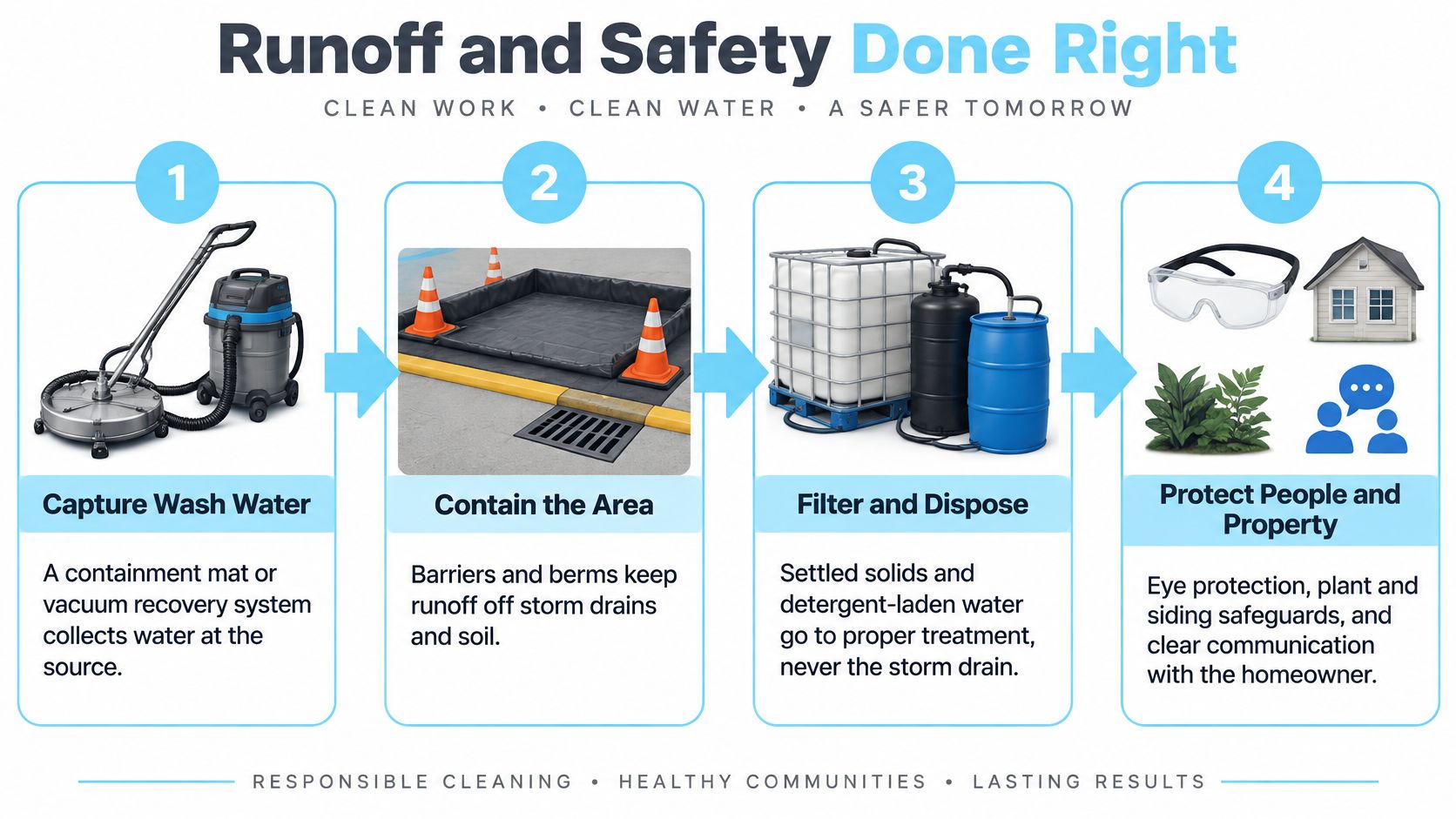
Responsible crews dry pre-clean the area, use as little water and chemical as the surface allows, contain the wash water, and send what they collect to a sanitary sewer connection approved for the job or an authorized treatment or disposal site. Method choice changes that math. A soft wash on siding uses lower pressure but more solution, so dwell time and rinse volume matter. Concrete cleaned with higher pressure moves grit faster, so recovery has to keep up with the flow.
The Sequence a Careful Crew Follows
1. Dry pre-clean the area. Sweep loose debris and absorb oil spots before water touches the surface, because dry removal keeps the worst material out of the wash stream.
2. Map the low points and inlets. Find where water will travel, then cover or plug nearby storm drains before the first trigger pull.
3. Capture the wash water. Berms, containment mats, portable vacuum recovery and pumps keep runoff within reach instead of letting it sheet down the slope.
4. Confirm the disposal route in advance. Collected water goes to an approved sanitary sewer connection or an authorized treatment or disposal site, never into a storm drain.
5. Document the test spot, pressure and nozzle before the full area is cleaned, so the method is a decision rather than an accident.
Safety runs alongside the water. Anyone operating a wand treats it as a cutting tool: eye protection, boots, no bystanders in front of the nozzle, and firm footing on wet concrete. Older painted surfaces need their own check. The Bend homeowner guidance on surface cleaning ties pre-1978 paint to lead-safe handling and calls for tighter control when hot water or chemicals are part of the job, which is why the age of a house belongs in the conversation before the first pass.
Ask for the runoff plan in writing, including which drains get covered and where the water ends up. A provider who can answer that without hedging has done the job before.
Finding a Trusted Power Washing Provider Nearby
Coverage comes first. Glow Cleaning Company serves Fall River and surrounding communities, including Taunton, Attleboro, New Bedford and Dartmouth, and may accommodate a home just outside the standard perimeter. Enter the address in the booking engine or call the office to confirm before you spend time collecting quotes from providers who cannot reach you.
Then understand what a local search returns. Pressure washing has low startup costs, so the results mix established companies with small one-truck operators working off a phone number. The machine's pressure rating tells you almost nothing about which sort you have found. The method they describe for each surface does, because method is what decides both the quote and the chance of damage.

Four Checks Before You Book Anyone
1. Ask for proof of insurance and bonding before a date is set. That is your protection if a wand scars siding or a ladder meets a window.
2. Make the provider name the method for every surface, matching the rows in the surface table. "We'll pressure wash it all" is not a method. It is a warning.
3. Read reviews for mentions of fragile surfaces like painted trim, older masonry and vinyl seams. Skill with those shows up in what customers describe, not in star counts.
4. Confirm whether runoff control and disposal are built into the quoted price or billed as extras. A cheap quote that skips containment stops being cheap when the cleanup cost lands on you.
If you're near the South Coast, our Dartmouth service page lists the surrounding towns we cover. Wherever you are, compare at least three providers on identical surfaces, identical methods, identical runoff handling and identical access assumptions. That is the only way the totals mean anything.
A Dartmouth Driveway and Siding Quote Worked Through
A homeowner in Dartmouth has a 1,000-square-foot concrete driveway, a two-story vinyl-sided house, painted wood trim on a home built in the 1960s, and a storm drain sitting at the foot of the driveway where the slope runs toward the street. Four surfaces, one drain, one old house. Here's how the decisions stack up.
The driveway gets a surface cleaner or rotary nozzle at working pressure, in overlapping passes, with the drain covered and the runoff captured before the first pass. Concrete is the one surface on the property where higher pressure is appropriate, and even there the tip stays a consistent distance from the slab so the finish doesn't pit.
The siding gets a soft wash at low pressure with a detergent that kills the mildew at the root, rinsed from the top down, with water kept off the lower panel seams rather than driven behind them. The 1960s trim gets hand work or very low pressure, and because the house predates 1978, loose paint gets treated as a lead risk and handled with lead-safe practice instead of being blasted into the air.
Charlotte's 2025 stormwater guidance is blunt about the last piece: wash water should be collected and disposed of properly, not sent into a storm drain, and letting a puddle evaporate on the driveway doesn't solve it because the next rain moves the residue (Charlotte stormwater guidance).
Now set two quotes side by side. The low one is a headline price for a fast rinse of everything, no drain protection, no test spot, no lead-safe handling on the trim. The higher one lists each surface, its method, the drain protection, the runoff capture and the disposal route.
The second quote costs more and carries less risk: less chance of stripped paint, less chance of a contamination call, less chance of paying twice for the same work. Build your own version by listing every surface on your property, the method each one needs, and the runoff plan, then send that identical list to every provider you contact.
Confirm Scope and Access Before You Book
The last half hour of preparation belongs to you, and it decides how smooth the visit goes. Do this before anyone is scheduled.
Prep Steps to Finish Before the Truck Arrives
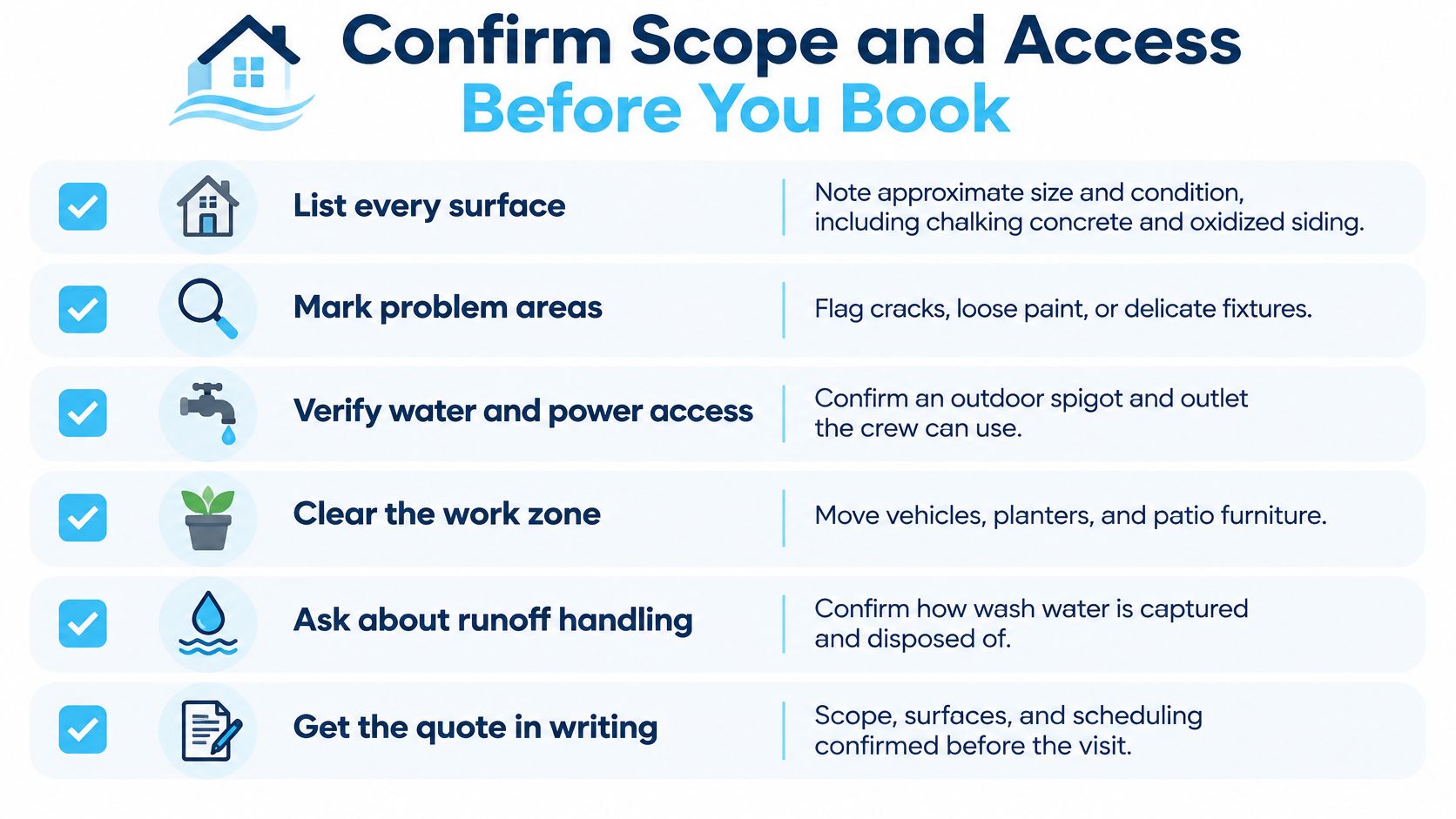
1. Write down every surface, with approximate size and condition: chalking concrete, oxidized siding, peeling paint, mildew on the north wall.
2. Note the build year of the house. If it predates 1978, painted surfaces may need lead-safe handling, and the provider should say so before the job.
3. Mark the storm drains near the work area, plus any upper levels or tight corners that need ladders, lifts or extension wands.
4. Send the same scope to each provider, so every quote covers identical surfaces and identical access assumptions.
5. Request a test spot and a written method for each surface before the full job begins.
6. Check the included lines for drain protection, runoff capture and disposal, and compare totals only once those lines match.
Access matters as much as scope. Confirm where the crew can reach an outdoor spigot and an outlet, move vehicles, planters and patio furniture clear, and flag anything fragile near the work zone, from window screens to a favorite shrub.
Watch the way a crew works a surface before you commit, and you'll spot the difference between a controlled pass and a blast. What to expect after booking is straightforward: a written scope, a confirmed start time, and a clear answer on runoff before any water touches the property. Our instant quote tool shows the exact flat-rate price before booking, and because we clean properties of any size and are at customers' service six days a week, weather-dependent work in spring and autumn is easier to slot in. When you're ready, contact the Glow Cleaning Company team with your surface list and address.
---
Glow Cleaning Company offers power washing for driveways, siding, patios and decks across Fall River and the surrounding Massachusetts and Rhode Island communities, alongside routine home and office cleaning. Pricing is flat-rate, so the quote you see is the price you pay, and the team can confirm coverage by address before you commit. Visit Glow Cleaning Company to check your property's price and book a date.